Showing posts with label torture. Show all posts

Thursday, March 15, 2012

NY TIMES: Solitary wastes lives, money, and sanity.

Abolishing solitary confinement as we know it can be done, people, and work out for the better for all of us - if Mississippi can do it, so can Arizona. The vast majority of prisoners do return to their communities after all, and we would be wise not to destroy their sanity and humanity while "rehabilitating" them beforehand. 

This state, unfortunately, is constructing 500 more Supermax beds as we speak, however - no public hearings, no way to stop them...what a waste of precious resources. No one at the ADC seems to know what "evidence-based practice" means or why they should study up on it. For that reason, crime in this state will never really be impacted by the rate at which we incarcerate people - all the state is doing is setting people up to repeat again.


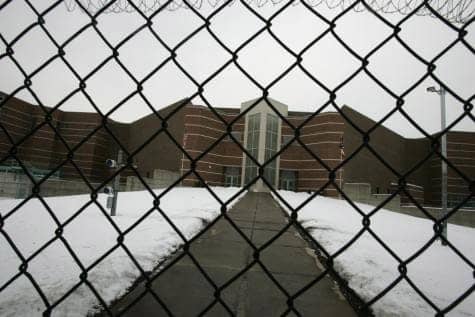
Our state facility for the seriously mentally ill
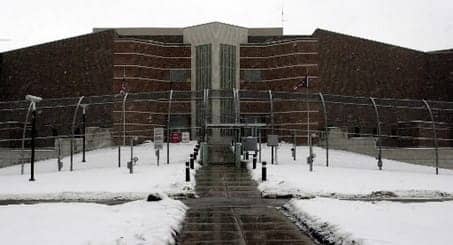
SUPERMAX in Florence, AZ


------------from the New York Times-------------

 Prisons Rethink Isolation, Saving Money, Lives and Sanity


CHANGED ATTITUDES Christopher B. Epps, Mississippi's commissioner of corrections, said he used to believe that difficult inmates should be locked down as tightly as possible, for as long as possible. “That was the culture, and I was part of it,” he said.

PARCHMAN, Miss. — The heat was suffocating, and the inmates locked alone in cells in Unit 32, the state’s super-maximum-security prison, wiped away sweat as they lay on concrete slab beds.

Kept in solitary confinement for up to 23 hours each day, allowed out only in shackles and escorted by guards, they were restless and angry — made more so by the excrement-smeared walls, the insects, the filthy food trays and the mentally ill inmates who screamed in the night, conditions that a judge had already ruled unacceptable. 

So it was not really surprising when violence erupted in 2007: an inmate stabbed to death with a homemade spear that May; in June, a suicide; in July, another stabbing; in August, a prisoner killed by a member of a rival gang. 

What was surprising was what happened next. Instead of tightening restrictions further, prison officials loosened them. 

They allowed most inmates out of their cells for hours each day. They built a basketball court and a group dining area. They put rehabilitation programs in place and let prisoners work their way to greater privileges.
In response, the inmates became better behaved. Violence went down. The number of prisoners in isolation dropped to about 300 from more than 1,000. So many inmates were moved into the general population of other prisons that Unit 32 was closed in 2010, saving the state more than $5 million. 

The transformation of the Mississippi prison has become a focal point for a growing number of states that are rethinking the use of long-term isolation and re-evaluating how many inmates really require it, how long they should be kept there and how best to move them out. Colorado, Illinois, Maine, Ohio and Washington State have been taking steps to reduce the number of prisoners in long-term isolation; others have plans to do so. On Friday, officials in California announced a plan for policy changes that could result in fewer prisoners being sent to the state’s three super-maximum-security units. 

The efforts represent an about-face to an approach that began three decades ago, when corrections departments — responding to increasing problems with prison gangs, stiffer sentencing policies that led to overcrowding and the “get tough on crime” demands of legislators — began removing ever larger numbers of inmates from the general population. They placed them in special prisons designed to house inmates in long-term isolation or in other types of segregation. 

At least 25,000 prisoners — and probably tens of thousands more, criminal justice experts say — are still in solitary confinement in the United States. Some remain there for weeks or months; others for years or even decades. More inmates are held in solitary confinement here than in any other democratic nation, a fact highlighted in a United Nations report last week. 

Humanitarian groups have long argued that solitary confinement has devastating psychological effects, but a central driver in the recent shift is economics. Segregation units can be two to three times as costly to build and, because of their extensive staffing requirements, to operate as conventional prisons are. They are an expense that many recession-plagued states can ill afford; Gov. Pat Quinn of Illinois announced plans late last month to close the state’s supermax prison for budgetary reasons. 

Some officials have also been persuaded by research suggesting that isolation is vastly overused and that it does little to reduce overall prison violence. Inmates kept in such conditions, most of whom will eventually be released, may be more dangerous when they emerge, studies suggest. 

Christopher B. Epps, Mississippi’s commissioner of corrections, said he found his own views changing as he fought an American Civil Liberties Union lawsuit over conditions in the prison, which one former inmate described as “hell, an insane asylum.” 

Mr. Epps said he started out believing that difficult inmates should be locked down as tightly as possible, for as long as possible. 

“That was the culture, and I was part of it,” he said. 

By the end of the process, he saw things differently and ordered the changes. 

“If you treat people like animals, that’s exactly the way they’ll behave,” he now says. 

A Very Costly Experiment 
 
James F. Austin held up the file of an inmate in Unit 32 and posed a question to the staff members gathered in a conference room at the Mississippi Department of Corrections headquarters in Jackson. 

“O.K., does this guy really need to be there?” he asked. 

It was June 2007, and the department was under pressure to make court-ordered improvements to conditions at Unit 32, where violence was brewing. Dr. Austin, a prison consultant, had been called in by the state. As the discussion proceeded, the staff members were startled to discover that many inmates in Unit 32 had been sent there not because they were highly dangerous, but because they were a nuisance — they had disobeyed orders, had walked away from a minimum-security program or were low-level gang members with no history of causing trouble while incarcerated. 

“He started saying, ‘You tell me what kind of person needs to be locked up,’ and it wasn’t near the numbers that we had,” said Emmitt L. Sparkman, deputy commissioner of corrections. By the time they were done, the group had determined that up to 80 percent of the 1,000 or more inmates at Unit 32 could probably be safely moved to less restrictive settings. 

Like many such prisons, Mississippi’s supermax, opened in 1990, owed its existence to the fervor for tougher punishment that swept through the country in the 1980s and 1990s. 

“There was an incredible explosion in the prison population coupled with a big infusion of gangs,” Dr. Austin said. “Riots were occurring. Prison officials were literally losing control.” 

Some states built special units to isolate difficult prisoners — “the worst of the worst,” prison officials said — from the general prison population. Others retrofitted existing prisons or established smaller units within larger facilities. The federal penitentiary in Marion, Ill., was locked down in 1983 after the murder of two prison guards, its inmates confined to cells 23 hours a day and then kept that way permanently. In 1989, California opened Pelican Bay State Prison in Crescent City, a remote town near the Oregon border, specially designed to control inmates in conditions that minimize human interaction.
By 2005, 44 states had supermax prisons or their equivalents. In most, inmates were let out of their cells for only a few hours a week. They were fed through slots in their cell doors and were denied access to work programs or other rehabilitation efforts. If visitors were allowed, the interactions were conducted with no physical contact.
And while prisoners had previously been sent to isolation for 10 or perhaps 30 days as a temporary disciplinary measure, they were now often placed there indefinitely.
Asked to explain the purpose of such confinement, prison wardens surveyed in 2006 by Dan Mears, a professor of criminology at Florida State University, cited “increasing safety, order and control throughout prison systems and incapacitating violent or disruptive inmates.”
But beyond that, said Dr. Mears, who called the rise of supermax prisons “a big, very costly experiment,” the goals seemed murky. Who exactly were “the worst of the worst”? How many people really needed such harsh control, and for how long? And how should the effectiveness of the prisons be judged, especially when measured against the costs of building and operating them?
Dr. Mears said there were no clear answers; indeed, he said, it is virtually impossible to determine how many inmates are in supermax prisons in the United States because there is no national tracking system and because states differ widely in what they call segregation units. “I don’t know of any business that would do this, not something that costs this much, with so little evidence or clarity about what you’re getting,” Dr. Mears said.
With no precise definition of who belonged there, prison systems began to send people to segregation units who bore little resemblance to the serial killers or terrorists the public imagined filled such prisons.
“Certainly there are a small number of people who for a variety of reasons have to be maintained in a way that they don’t have access to other inmates,” said Chase Riveland, a former head of corrections in Colorado and Washington State who now serves as an expert witness in prison cases. “But those in most systems are pretty small numbers of people.”
Mr. Epps, who is president-elect of the American Correctional Association, likes to say prison officials started out isolating inmates they were scared of but ended up adding many they were simply “mad at.”
‘The Real Damage’ 
 
In 1831, the French historian Alexis de Tocqueville visited the Eastern State Penitentiary in Philadelphia, where prison officials were pioneering a novel rehabilitation method based on Quaker principles of reflection and penitence. They called it solitary confinement.
“Placed alone in view of his crime,” de Tocqueville wrote in a report to the French government, the prisoner “learns to hate it, and if his soul be not yet surfeited with crime, and thus have lost all taste for any thing better, it is in solitude, where remorse will come to assail him.”
But for many prisoners, isolation was as likely to produce mental illness as remorse, and by the late 19th century, enthusiasm for the approach had flagged. In 1890, deciding the case of a death row inmate held in solitary confinement, Justice Samuel Freeman Miller of the Supreme Court wrote that many prisoners fell, “after even a short confinement, into a semifatuous condition, from which it was next to impossible to arouse them, and others became violently insane; others still committed suicide.”
It was the last time the nation’s highest court would address the psychological effects of solitary confinement directly. But lower courts in some states have acknowledged the stress that isolation puts on inmates who are already mentally ill, prohibiting their being placed in solitary except in urgent circumstances.
When Dr. Terry Kupers, a psychiatrist and expert on the effects of solitary confinement, toured Unit 32 for the plaintiffs in the A.C.L.U. lawsuit, he found that about 100 of the more than 1,000 inmates there had serious mental illness, in many cases improperly diagnosed. Some were actively hallucinating. Others threw feces or urine at guards or howled in the night.
In turn, the mentally ill inmates were mistreated by corrections officers, who had little understanding of their condition, Dr. Kupers said.
In a report filed to the court, he described the case of James Coffield, a mentally ill prisoner who had demonstrated “a long history in Unit 32 of bizarre and disruptive behaviors” that prison psychiatrists “characterized as merely ‘manipulative’ and which security staff punished with increasingly harsh force, including repeated gassing with chemicals.”
Mr. Coffield eventually tried to hang himself but failed and ended up in a vegetative state.
Many states continue to house inmates with mental illness in isolation. Some inmates appear to function adequately in solitary confinement or even say they prefer it. But studies suggest that the rigid control, absence of normal human interaction and lack of stimulation imposed by prolonged isolation can cause a wide range of psychological symptoms including insomnia, withdrawal, rage and aggression, depression, hallucinations and thoughts of suicide, even in prisoners who are mentally healthy to begin with.
A study of prisoners in the Pelican Bay supermax, for example, found that almost all reported nervousness, anxiety, lethargy or other psychological complaints. Seventy percent said they felt themselves to be at risk of “impending nervous breakdown.”
“Worse still is the fact that for many of these men, the real damage only becomes apparent when they get out of this environment,” said Craig W. Haney, a professor of psychology at the University of California, Santa Cruz, and an expert on the effects of solitary confinement, who led the study.
In fact, some research has found that inmates released from supermax units are more likely to reoffend than comparable prisoners released from conventional maximum-security prisons, and that those crimes are more likely to be violent. In Colorado, said Tom Clements, executive director of corrections, it turned out that about 40 percent of inmates held in long-term isolation were being released directly to the community with no transition period.
The psychological research has drawn attention, not least from the international community. In a report presented to the United Nations Human Rights Council in Geneva on Monday, Juan E. Méndez, the U.N.’s special rapporteur on torture and other abuse, called for a ban on solitary confinement except in limited situations and singled out the United States for its reliance on the method.
In 2010, the European Court of Human Rights blocked the extradition of four terrorism suspects from Britain, saying it wanted to study whether imprisonment at the federal supermax prison in Florence, Colo., violated a ban on inhuman or degrading treatment.
Yet for states, economic and practical arguments may prove more persuasive than humanitarian concerns.
“It’s just exceedingly expensive to hold someone in a segregation bed,” said Angela Browne, a senior fellow at the Vera Institute of Justice, a nonprofit policy and research group, and head of the institute’s segregation reduction project, which works with states to find alternatives to segregation.
Several states, citing economic reasons, have converted supermax units to more conventional prisons, and a few have closed the prisons altogether. Unit 32 was closed in 2010. The increased costs are largely a result of the staffing required to deliver food and other services to cells and escort prisoners when they are let out.
In 2010, for example, Virginia reported that it cost $89.59 per day to keep a prisoner at Red Onion State Prison, a supermax unit with 399 employees, compared with $60.04 per day at Sussex II State Prison, a maximum-security facility that houses almost 500 more inmates but has a staff of 353.
Gambling on Change 
 
Roy Harper, serving time for armed robbery, kidnapping and other charges, used to wake in his cell at Unit 32 seized with anxiety every morning. “You never know what the day is going to bring,” he said recently.
Sometimes it was flooding from malfunctioning toilets. Sometimes it was inmates setting fires or cutting themselves — two prisoners cut off their own testicles in the time he spent there, he said — and sometimes it was just the sense of isolation he felt, “like being alone in the world.”
Mr. Harper was a prisoner in Unit 32 from the day it opened to the day it closed, 20 years later. But the summer of 2007, he recalled, was worse than most. When the killings began, prison officials first cracked down, taking away the inmates’ fans — the only relief from summer temperatures that approached 100 degrees and, according to an environmental expert who filed a report on the conditions, could feel like 120 or more. They kept prisoners in their cells around the clock, not even allowing them out for exercise, he said.
Mr. Sparkman, the deputy corrections commissioner, viewed the situation as so critical that in July he moved from his home in Jackson to Parchman, where Unit 32 sits on the grounds of the state penitentiary. It was clear that a different approach was needed, he said: “What we were doing, the 23-hour lockdown, was not working.”
But the shift had to be made carefully.
“It was gradual, and it was very controlled,” Mr. Sparkman said. “We started out with one building, identifying those groups that we could let out, and we let some of them out. Some of them we were able to transfer completely out.”
A few guards rebelled at the new orders and resigned in protest. A few others were fired. But by the end of six months, most prisoners were spending hours a day outside their cells or had been moved to the general population of other prisons. A clothing warehouse was turned into a group dining hall, and a maintenance room was converted to an activities center. The basketball court filled with players.
Mr. Harper did not benefit immediately from the changes. He remained in 23-hour lockdown until he worked his way to greater privileges. But he was elated at what he saw, he said, with inmates “working again, walking without chains, going to the yard, going to the chow hall.”
The A.C.L.U. continues to monitor conditions in other prisons in the state. But Margaret Winter, the lead lawyer for the A.C.L.U. in its lawsuit over Unit 32, said she watched the transformation there in wonder, especially as two men who at the beginning of the process seemed deeply entrenched in their views shifted direction. The change, she said, was “stunning.”
Mr. Sparkman said the new approach went against everything he had been trained to do. “If you’d come to me in 2002 and told me I was going to do something like that, I’d say, ‘You don’t know me,’ ” he said. “I’d have probably locked them down for anything that squeaked.”
Mr. Epps looks back at the decision as a nerve-racking gamble.
“Was it scary? Absolutely,” he said. “But it worked out just fine. We didn’t have a single incident.”

Scott Shane contributed reporting from Washington.
This article has been revised to reflect the following correction:

Correction: March 14, 2012
An earlier version of this article misstated the position of Christopher B. Epps, Mississippi’s commissioner of corrections, in the American Correctional Association. He is president-elect, not president. (Daron Hall is the current president; Mr. Epps takes over in 2013.)

Monday, July 4, 2011

Prisons, guards, and the manifestation of Evil.

The 1971 Stanford Prison Experiment proved that "otherwise good" people can do really horrible things to others. This clip from Democracy Now lacks some political analysis, but as to the psychology of the abuse of power and the effects on prisoners, it lends a little insight into how it all goes down. Well worth the watch, even if you're familiar with the story..


Here's the latest press release from Stanford on the good professor Zimbardo, by the way.

Thursday, March 17, 2011

Solitary: Buried Alive in Colorado - and AZ.

This comes from our friends at Solitary Watch, the best blog to follow on the subject. Another excellent source of information on supermax prisons is the Tucson American Friends Service Committee (AFSC-Tucson) report "Buried Alive: Supermaxed." Additionally, the National ACLU has announced taking on the abuse of these types of custody arrangements to manage or punish the symptoms of serious mental illness.

Please contact me if you are concerned for a loved one with a serious mental illness who is imprisoned in Eyman or one of other the special management or detention units. My number is 480-580-6807.

-----------------------

Fortresses of Solitude (Part 1)

February 28, 2011
Solitary Watch Blog
by James Ridgeway and Jean Casella

Cañon City, Colorado, is the Solitary Confinement Capital of the Western World. Now, a Small Group Lawyers, Legislators, and Activists Is Challenging This All-American Form of Torture.

Part 1: The Alcatraz of the Rockies

"Control Unit" by Thomas Silverstein


On the wall opposite Laura Rovner’s desk at the University of Denver’s Sturm College of Law is a large framed drawing depicting her as the Angel of Justice. The artist is Thomas Silverstein, a onetime armed robber who is serving multiple life sentences for the murders of two fellow prison inmates and a guard. Silverstein made his meticulously detailed ink drawing–which shows a winged Rovner holding a sword, surrounded by slain bodiesin his 7 x 12-foot cell at the notorious United States Penitentiary Administrative Maximum, or ADX, in rural Florence, Colorado. A talented self-taught artist, he has had plenty of time to hone his craft. For the last 27 years, Tommy Silverstein has been literally buried alive—held in an extreme form of solitary confinement in the depths of the federal prison system, under a “no human contact” order. The man who was at one time known as “America’s Most Dangerous Prisoner” is now described, on a web site maintained by his supporters, as “America’s Most Isolated Man.”

He is also Laura Rovner’s client. Rovner, teaching fellow Brittany Glidden, and a group of student attorneys from DU’s Civil Rights Clinic have filed a lawsuit in Federal District Court in Denver, arguing that Silverstein’s 84 square feet of utter and permanent isolation violate the Constitution’s ban on cruel and unusual punishment, as well as its guarantee of due process. The suit is just one of several brought by the clinic on behalf of various inmates at ADX and at the nearby state supermax prison. Along with a small handful of other cases in Colorado and around the country, the work of DU’s Civil Rights Clinic represents the leading edge of a legal challenge to solitary confinement. As such, it has the potential to affect the lives of the 100,000 or more prisoners who are held in some form of solitary on any given day in prisons across the United States.

In person, the Angel of Justice is a petite, brown-haired woman who chain-swigs Diet Pepsis and pauses to glance at her computer, which incessantly pings for her attention. Rovner has spent most of her career teaching in civil rights clinics at Georgetown, Syracuse, and North Dakota Law Schools, defending the rights of the deaf and other people with disabilities who had been victimized by discrimination, as well as the rights of prisoners. As she talks about her work at DU, she buzzes with energy, yet chooses her words carefully, measuring them against her clients’ best interests.


After pointing out Silverstein’s drawing, Rovner displays some samples from a pile of hand-knit afghans, scarves, and mittens, also made by Silverstein (and notable for the absence of red, blue, and black, which are banned at ADX as “gang colors”). She shows us a recent photograph, in which Silverstein sports long gray hair and an even longer white beard, his eyes squinting out above weathered cheeks and a friendly smile. Dressed in loose white clothing, he looks like an angelic hipster, maybe an aging yoga teacher, or at worst an over-the-hill biker—certainly not a man more dangerous than the host of convicted terrorists, spies, mobsters, and drug kingpins housed with him at ADX.

Silverstein never killed anyone before he got to prison, and he contends that he did so then only when he felt his own life was threatened. He also says that, nearly three decades later, he is a changed man (he does, in fact, meditate and do yoga in his cell). This transformation is something his attorneys seem to accept, and they make a point of it in their suit. But ultimately, Rovner believes, if the Constitution is to mean anything, then it must apply not just to people and causes that engender sympathy, but to men like Tommy Silverstein, who have been written off as “the worst of the worst.” It must prevail not only in the light of day, but in the fluorescent-lit dungeons of ADX.


[READ THE FULL ARTICLE HERE]


---------


Solitary Watch:

Part 2: Showdown at the Colorado State Penitentiary

Sunday, January 16, 2011

Ohio Hunger Striker Victory; Executions still loom.

The SF Bay View does excellent coverage of both California's and the nation's issues related to political prisoners, conditions of confinement, mass incarceration, racial profiling, police brutality, etc., and will be following the Lucasville hunger strikers at the OSP - go straight there for your news. They often publish letters from prisoners across the country as well, so if you know any prisoners with something to say about the conditions of confinement where they are, turn them on to the SF Bay View.

Spacebookers, please hit the strikers' solidarity site and join. These guys still have a hard road ahead.

Also, a reminder that it ain't over yet in Georgia, either. The Black Agenda Report has been providing the best coverage of issues there, and is overall a great publication coming from the Black Left.

Finally, for those of you interested in supporting Arizona's prisoners and challenging the conditions of confinement here, contact me (see side column) or drop into the Conspire Art Collective at 901 N. 5th St, Phoenix (NE corner of 5th. St & Garfield) for a prisoner support group on Thursdays at 5:00pm. Look for me in red high tops and a cowboy hat. My cell is 480-580-6807 if you can't find me or just want to know more. The weekly meeting of the Phoenix Anarchist Coalition follows at 7:30pm.

---------------------------------------

A great rally, a great victory for the Lucasville hunger strikers

San Francisco Bay View

January 15, 2011 @ 8:23 pm

by Denis O’Hearn

Jan. 15, 4:33 p.m. – I have a short report on today’s rally at the Ohio State Penitentiary in support of the three men on hunger strike. But first, I can now report to you the wonderful news that all three have resumed eating because they achieved a victory. The prison authorities have provided, in writing, a set of conditions that virtually meets the demands set out by Bomani Shakur in his letter to Warden Bobby, provided below.

[1]
Ohio State Penitentiary

The hunger strikers send you all thanks for your support and state that they couldn’t have won their demands without support from people from around the world. But they add to their statement the following: This time they were fighting about their conditions of confinement, but now they begin the fight for their lives.

They were wrongfully convicted of complicity in 1993 murders in Lucasville prison and have faced retribution because they refused to provide snitch testimony against others who actually committed those murders. Now, because of Ohio’s – and other states’ – application of the death penalty, they still face execution at a future date. Ohio is today exceeded only by Texas in its enthusiasm for applying the death penalty. We need to take some of this energy that was created around the hunger strike to help these men fight for their lives.

So, we may celebrate a great victory for now. Common sense has prevailed in a dark place where there appeared to be no light. But watch this space [2]for further news on their ongoing campaign.

I hope to share a copy of the Ohio prison authorities’ written statement that ended this hunger strike in a short time.

As Bomani has told me many times, “It ain’t over …”

Jan. 15, 4:40 p.m. – The rally at OSP was attended by a large crowd, including many members of the families of the hunger strikers, despite the freezing weather. Family members met with the hunger strikers this morning and they reported that they were in high spirits on ending their hunger strike and winning their demands, but that they now had to turn their attention to their death sentences.

Statements of support came from all over the world and a small delegation of relatives, along with Alice Lynd, went to the prison and left a copy of our open letter for Warden David Bobby [3], signed by more than 1,200 people including prominent people from Ohio and around the world. Warden Bobby was not there, but a designated representative received the letter on his behalf with a promise that he would read it.

The crowd then proceeded to a church hall in downtown Youngstown for refreshments and some celebration over the good news. The organizers, especially Sharon Danann and Alice and Staughton Lynd, want to thank everyone who supported these men for their contribution to this victory.

Our thoughts are with Bomani, Hasan, Jason and Namir, and we will remain at their sides.

Denis O’Hearn is professor of sociology at Binghamton University SUNY. His book, “Nothing But an Unfinished Song,” is a biography of the Irish hunger striker Bobby Sands. This story first appeared on the Facebook page “In Solidarity with the Lucasville Uprising Prisoners on Hunger Strike [2].” Contact Denis O’Hearn through Facebook, at http://www.facebook.com/profile.php?id=1533483976&v=wall [4].

Letter from Keith LaMar (Bomani Shakur) to Warden Bobby of Ohio State Penitentiary

by Keith LaMar

[5]
Bomani Shakur

Jan. 3 – I’m writing to inform you that I am henceforth on a hunger strike. After 12 years of what can only be described as a double penalty, I am respectfully requesting that you cease this tortuous predicament that I am in. As a death-sentenced prisoner, I should be allowed the very same privileges as other similarly sentenced prisoners, and this is all I am asking, nothing more or less. Therefore, in spite of what your personal feelings are, I hereby appeal to your sense of professionalism and ask that you seriously consider the following demands:
  1. Full recreation privileges.
  2. Full commissary privileges.
  3. Full access to Access SecurePac catalog.
  4. Semi-contact visits.
  5. Access to computer database so that I can assist in the furtherance of my appeals.

These things are presently being offered to all death-sentenced prisoners and, again, I hereby respectfully request that I be granted the same. As you know, my appeals are fast approaching resolution, moving me closer and closer to a day of reckoning. Please allow me the opportunity to pursue whatever my end will be with the same level of dignity and respect that other similarly situated prisoners enjoy. You have this within your power to permit, and I ask that instead of abusing your power that you use it justly, and soon.

Bomani Shakur can be reached by writing to Keith LaMar, 317-117, P.O. Box 1436, Youngstown OH 44501. Addresses for the other Lucasville prisoners are:

  • Jason Robb, 308-919, P.O. Box 1436, Youngstown OH 44501
  • Siddique Abdullah Hasan, R 130-559, P.O. Box 1436, Youngstown OH 44501
  • James Were, 173-245, P.O. Box 1436, Youngstown OH 44501; refer to him by his preferred name, Namir Abdul Mateen.

Saturday, January 15, 2011

Global solidarity with Ohio hunger strikers grows.

Hey all - tune into this SUPERMAX/death row hunger strike in Ohio. Check out the links at the bottom of the article for more. I'll follow this post with one about the rally. Here's the background post.

The letter that's been circulating (below) is being printed and given to OSP warden David Bobby, but nothing would stop readers from reprinting the letter or writing one with their own sentiments and sending it to the attention of:

Warden David Bobby, Ohio State Penitentiary;
Director Gary Mohr, Ohio Department of Rehabilitation and Correction; and
Chief William A. Eleby, Bureau of Classification, Ohio Department of Rehabilitation at:

Ohio State Penitentiary
878 Coitsville-Hubbard Road
Youngstown, Ohio 44505

Fax (330) 743-0841

You can also call and express your concern/support for the hunger strikers:

(330) 743-0700;

Email for General Inquiries

JoAnn.King@odrc.state.oh.us


-------------------------------

Lucasville hunger strikers’ support rally outside Ohio State Penitentiary on MLK’s birthday Saturday, Jan. 15, 1 p.m.

San Francisco Bay View

January 14, 2011 @ 7:26 pm

Delegation to present Warden David Bobby’s representative with letter of support for the hunger strikers with hundreds of signatures

by Sharon Danann, Lucasville Uprising Freedom Network

[1]
This is the Ohio State Penitentiary, where supporters of the Lucasville prisoners on hunger strike will rally tomorrow, Saturday, Jan. 15, on Dr. Martin Luther King’s birthday

Three inmates on death row at Ohio State Penitentiary have been on hunger strike since Monday, Jan.3, to protest the conditions of their confinement. All three prisoners received death sentences following the rebellion in the Southern Ohio Correctional Facility in Lucasville, Ohio, and have been held at the highest security level, Level 5, since they were transferred to OSP In 1998.

The hunger strikers, Keith LaMar, Siddique Abdullah Hasan (Carlos Sanders) and Jason Robb are simply asking that they be treated like other death row prisoners. A fourth prisoner, Namir Abdul Mateen (James Were), may join the hunger strike as his health permits. Other prisoners at OSP may go on hunger strike on Jan. 15 to show their support for the hunger strike in progress.

Robb has pointed out that other prisoners from the Lucasville disturbance have been transferred out of OSP or have had their security levels reduced so that they are not suffering the extreme restrictions of Level 5. In the words of LaMar, also known by his chosen name, Bomani Hondo Shakur:

“We have undergone penalty on top of penalty, kept from fully participating in our appeals, from touching our friends and families, denied adequate medical treatment, and so many other things that are too numerous to name. In a word, we have been tortured. And, yes, I’m aware that the word ‘tortured’ is a strong word to use, but I know of no other word that more adequately describes what we have been through. We have been put through hell.”

An “Open Letter” has been circulating and has collected more than 1,200 signatures (see below). In the sampling of the first 100 names, it can be seen that the prisoners have support from Ohio, many other states and all across the globe, among them many prominent citizens. After the participants in the rally have had the opportunity to add their names to the list, a delegation of friends and family members of the hunger strikers will proceed to OSP to present the signed letter to Warden David Bobby’s designated representative. Youngstown attorney Staughton Lynd is available to answer questions about the “Open Letter” at (330) 652-9635.

Supporters are driving in from other states and from several Ohio cities to participate in the rally at the gates of OSP. Family members of the hunger strikers will be in attendance. Messages of solidarity will be read that are coming in from across the country and around the world. In particular, people in Ireland are remembering the tragic deaths of 10 prisoners who went on hunger strike thirty years ago and are sending words of understanding and support.

The location for Saturday’s event is 878 Coitsville-Hubbard Rd., Youngstown, Ohio. The rally and press conference is a joint effort of the Youngstown-based prisoner-advocacy organization, LOOP (Loved Ones Of Prisoners), the Lucasville Uprising Freedom Network and the Cleveland chapter of the New Black Panther Party.

Contact Sharon Danann and the Lucasville Uprising Freedom Network at (216) 571-2518 lucasvillefreedom@gmail.com [2].

---------------------------------------------


Open letter to Ohio prison officials on behalf of the Lucasville prisoners on hunger strike

To: Warden David Bobby, Ohio State Penitentiary; Director Gary Mohr, Ohio Department of Rehabilitation and Correction; and Chief William A. Eleby, Bureau of Classification, Ohio Department of Rehabilitation

We the undersigned call for an end to isolated “supermax” imprisonment in Ohio State Penitentiary. We are especially concerned about the cases of Siddique Abdullah Hasan (Carlos Sanders), Bomani Shakur (Keith LaMar), Jason Robb and Namir Abdul Mateen (James Were), who are on hunger strike in protest against their conditions of confinement. We understand that they have taken this course of action out of total frustration with their hopeless situation at OSP (Ohio State Penitentiary).

These men have been kept in isolation continuously since they were sentenced to death for their alleged roles in the 11-day rebellion at the Southern Ohio Correctional Facility (SOCF) in Lucasville, Ohio, in April 1993. Hasan and Robb were two of the three men who negotiated a peaceful surrender in that rebellion and their actions undoubtedly saved lives.

Throughout their more than 17 years of solitary confinement, these four men have been subjected to harsher conditions than the more than 150 other men sentenced to death in Ohio. The conditions under which they are confined prevent them from ever being in the same space as another prisoner. Judge James Gwin of federal district court noted with amazement during the trial of the prisoners’ class action, Austin v. Wilkinson, that death-sentenced prisoners at the highest security level in the Ohio State Penitentiary wanted to be returned to Death Row!

The four have suffered Level 5 top security isolation since OSP was opened in 1998. This essentially means that they live in 23-hour lockup in a hermetically sealed environment where they have almost no contact with other living beings – human, animal or plant. When released from their cells for short periods of “recreation,” they continue to be isolated from others. During occasional visits, a wall of bullet-proof glass separates them from their visitors. They remain shackled, despite the fact that they could do no harm in these secure spaces. A few booths away, condemned men from death row sit in cubicles where a small hole is cut from the security glass between them and their visitors. They can hold their mother’s hand. With a little effort, they can kiss a niece or a grandchild. They do not have to shout to hold a conversation.

Hasan, LaMar, Robb and Were experience annual “security reviews,” but their outcome is predetermined. The prison authorities have told them, in writing:

“You were admitted to OSP in May of 1998. We are of the opinion that your placement offense is so severe that you should remain at the OSP permanently or for many years regardless of your behavior while confined at the OSP.”

The lack of a meaningful review violates the due process clause of the Fifth Amendment of the U.S. Constitution. Keeping men in supermax isolation for long periods clearly violates the Eighth Amendment prohibition of cruel and unusual punishment. Moreover, the emphasized words above directly violate the explicit instruction of the Supreme Court of the United States in Wilkinson v. Austin.

These men are being held in solitary confinement permanently, until they are put to death by Ohio or their convictions reversed. This is not simply long-term solitary confinement, but in essence permanent solitary confinement.

Other prisoners sentenced to death for alleged crimes comparable to or worse than those for which Hasan, LaMar, Robb and Were were found guilty have been moved off of Level 5 – to Death Row, to Level 4 at OSP and out of OSP entirely. One of the four Lucasville defendants asks, “Must I have a mental breakdown in order to get off Level 5?”

We demand that the Ohio prison authorities remove these four men from Level 5 “supermax” security and that they end the cruel practice of long-term isolated confinement.

Signed by:

Jules Lobel, Vice President, Center for Constitutional Rights, Professor of Law, University of Pittsburgh

Christine Link, Executive Director, ACLU of Ohio

Noam Chomsky, Massachusetts Institute of Technology

David Goldberger, Professor Emeritus of Law, Ohio State University

Barbara Ehrenreich, author, academic, activist

Mike Ferner, National President, Veterans for Peace

Immanuel Wallerstein, academic and writer

Boaventura de Sousa Santos, University of Coimbra, Distinguished Legal Scholar, University of Wisconsin

Edward S. Herman, Wharton School, University of Pennsylvania

Professor Gabriel Palmer-Fernandez, Director, Dr. James Dale Ethics Center, Youngstown State University

Andrej Grubacic, author and lecturer at San Francisco Art Institute

Peter Linebaugh, historian, University of Toledo, Ohio

Michael Albert, founder, Znet

Professor Thomas Mathiesen, KROM, The Norwegian Association for Penal Reform, Oslo, Norway

Jana Schroeder, Former Director, American Friends Service Committee Ohio Criminal Justice Program

Jesse Lemisch, Professor of History Emeritus, John Jay College of Criminal Justice, CUNY

Denis O’Hearn, Professor of Sociology, Binghamton University, SUNY

Ellen Kitchens, CURE-Ohio, Inc.

Christian G. De Vito, Associazione Liberarsi, Italy

Lorry Swain, migrant rights activist, Ohio

Robert W. McChesney, Gutgsell Endowed Professor, University of Illinois at Urbana, Champaign

Jason Jaffery, Development Director, ACLU of Ohio Foundation

Kathie Izor, Colorado CURE Board

Raj Patel, author and scholar

Katherine Soltis, Chair, Cleveland Coalition Against the Death Penalty

Ioanna Drosou, Greek Initiative for Prisoners’ Rights

Immanuel Ness, CUNY, Editor, Working USA

Ron Keine, Assistant Director, Witness to Innocence

Carlos Ivan Ramos, Ph.D., Executive Director, Hispanic UMADAOP, Cleveland

Michael Parenti, author and scholar

Veronica Dahlberg, Board Member, ACLU Cleveland Chapter

Professor Phil Scraton, Law School, Queens University, Belfast

Sam Bahour, Management Consultant, West Bank, Palestine

Bob Fitrakis, Editor, Free Press, Columbus, Ohio

Faye Harrison, Southern Human Rights Organizers’ Network

Reverend Dorsey R. Stebbins, Cincinnati, Ohio

Herbert P. Bix, Pulitzer Prize-winning historian, SUNY, Binghamton

John Polanski, ordained minister, Mineral Ridge, Ohio

Judith Stanger, retired teacher, Boardman, Ohio

James Gilligan, M.D., Professor of Psychiatry and Law, New York University

James E. Ray, ordained minister, Poland, Ohio

Marcus Rediker, Historian, University of Pittsburgh

John Stoffer, Elder of Presbyterian Church, Salem, Ohio

Kathleen McGarry, attorney, New Mexico

Mary Ann Meaker, Ohioans to Stop Executions

Paulette F Dauteuil, The Jericho Movement for PP’s/POW

Sarah L. Duncan, retired teacher, Vienna, Ohio

Fr. Joseph E. Mulligan, S.J., Nicaragua

Jim Jordan, assistant for autistic children, Vienna, Ohio

Joe Lombardo, co-coordinator, United National Antiwar Committee, UNAC

Andrew Lee Feight, Associate Professor of History, Shawnee State University

Jane Stoffer, retired drug counselor, Salem, Ohio

Margaret J Plews, Arizona Prison Watch

Peter Rachleff, Professor of History, Macalester College, Saint Paul, Minnesota

Lynn Thompson Bryant, Presbyterian pastor, Akron, Ohio

And more than 1,100 others.

Related Posts