Showing posts with label lucasville five. Show all posts

Sunday, January 16, 2011

Ohio Hunger Striker Victory; Executions still loom.

The SF Bay View does excellent coverage of both California's and the nation's issues related to political prisoners, conditions of confinement, mass incarceration, racial profiling, police brutality, etc., and will be following the Lucasville hunger strikers at the OSP - go straight there for your news. They often publish letters from prisoners across the country as well, so if you know any prisoners with something to say about the conditions of confinement where they are, turn them on to the SF Bay View.

Spacebookers, please hit the strikers' solidarity site and join. These guys still have a hard road ahead.

Also, a reminder that it ain't over yet in Georgia, either. The Black Agenda Report has been providing the best coverage of issues there, and is overall a great publication coming from the Black Left.

Finally, for those of you interested in supporting Arizona's prisoners and challenging the conditions of confinement here, contact me (see side column) or drop into the Conspire Art Collective at 901 N. 5th St, Phoenix (NE corner of 5th. St & Garfield) for a prisoner support group on Thursdays at 5:00pm. Look for me in red high tops and a cowboy hat. My cell is 480-580-6807 if you can't find me or just want to know more. The weekly meeting of the Phoenix Anarchist Coalition follows at 7:30pm.

---------------------------------------

A great rally, a great victory for the Lucasville hunger strikers

San Francisco Bay View

January 15, 2011 @ 8:23 pm

by Denis O’Hearn

Jan. 15, 4:33 p.m. – I have a short report on today’s rally at the Ohio State Penitentiary in support of the three men on hunger strike. But first, I can now report to you the wonderful news that all three have resumed eating because they achieved a victory. The prison authorities have provided, in writing, a set of conditions that virtually meets the demands set out by Bomani Shakur in his letter to Warden Bobby, provided below.

[1]
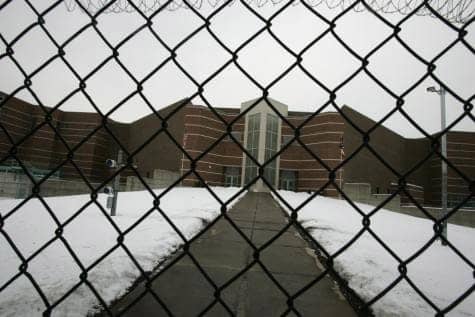
Ohio State Penitentiary

The hunger strikers send you all thanks for your support and state that they couldn’t have won their demands without support from people from around the world. But they add to their statement the following: This time they were fighting about their conditions of confinement, but now they begin the fight for their lives.

They were wrongfully convicted of complicity in 1993 murders in Lucasville prison and have faced retribution because they refused to provide snitch testimony against others who actually committed those murders. Now, because of Ohio’s – and other states’ – application of the death penalty, they still face execution at a future date. Ohio is today exceeded only by Texas in its enthusiasm for applying the death penalty. We need to take some of this energy that was created around the hunger strike to help these men fight for their lives.

So, we may celebrate a great victory for now. Common sense has prevailed in a dark place where there appeared to be no light. But watch this space [2]for further news on their ongoing campaign.

I hope to share a copy of the Ohio prison authorities’ written statement that ended this hunger strike in a short time.

As Bomani has told me many times, “It ain’t over …”

Jan. 15, 4:40 p.m. – The rally at OSP was attended by a large crowd, including many members of the families of the hunger strikers, despite the freezing weather. Family members met with the hunger strikers this morning and they reported that they were in high spirits on ending their hunger strike and winning their demands, but that they now had to turn their attention to their death sentences.

Statements of support came from all over the world and a small delegation of relatives, along with Alice Lynd, went to the prison and left a copy of our open letter for Warden David Bobby [3], signed by more than 1,200 people including prominent people from Ohio and around the world. Warden Bobby was not there, but a designated representative received the letter on his behalf with a promise that he would read it.

The crowd then proceeded to a church hall in downtown Youngstown for refreshments and some celebration over the good news. The organizers, especially Sharon Danann and Alice and Staughton Lynd, want to thank everyone who supported these men for their contribution to this victory.

Our thoughts are with Bomani, Hasan, Jason and Namir, and we will remain at their sides.

Denis O’Hearn is professor of sociology at Binghamton University SUNY. His book, “Nothing But an Unfinished Song,” is a biography of the Irish hunger striker Bobby Sands. This story first appeared on the Facebook page “In Solidarity with the Lucasville Uprising Prisoners on Hunger Strike [2].” Contact Denis O’Hearn through Facebook, at http://www.facebook.com/profile.php?id=1533483976&v=wall [4].

Letter from Keith LaMar (Bomani Shakur) to Warden Bobby of Ohio State Penitentiary

by Keith LaMar

[5]
Bomani Shakur

Jan. 3 – I’m writing to inform you that I am henceforth on a hunger strike. After 12 years of what can only be described as a double penalty, I am respectfully requesting that you cease this tortuous predicament that I am in. As a death-sentenced prisoner, I should be allowed the very same privileges as other similarly sentenced prisoners, and this is all I am asking, nothing more or less. Therefore, in spite of what your personal feelings are, I hereby appeal to your sense of professionalism and ask that you seriously consider the following demands:
  1. Full recreation privileges.
  2. Full commissary privileges.
  3. Full access to Access SecurePac catalog.
  4. Semi-contact visits.
  5. Access to computer database so that I can assist in the furtherance of my appeals.

These things are presently being offered to all death-sentenced prisoners and, again, I hereby respectfully request that I be granted the same. As you know, my appeals are fast approaching resolution, moving me closer and closer to a day of reckoning. Please allow me the opportunity to pursue whatever my end will be with the same level of dignity and respect that other similarly situated prisoners enjoy. You have this within your power to permit, and I ask that instead of abusing your power that you use it justly, and soon.

Bomani Shakur can be reached by writing to Keith LaMar, 317-117, P.O. Box 1436, Youngstown OH 44501. Addresses for the other Lucasville prisoners are:

  • Jason Robb, 308-919, P.O. Box 1436, Youngstown OH 44501
  • Siddique Abdullah Hasan, R 130-559, P.O. Box 1436, Youngstown OH 44501
  • James Were, 173-245, P.O. Box 1436, Youngstown OH 44501; refer to him by his preferred name, Namir Abdul Mateen.

Saturday, January 15, 2011

Global solidarity with Ohio hunger strikers grows.

Hey all - tune into this SUPERMAX/death row hunger strike in Ohio. Check out the links at the bottom of the article for more. I'll follow this post with one about the rally. Here's the background post.

The letter that's been circulating (below) is being printed and given to OSP warden David Bobby, but nothing would stop readers from reprinting the letter or writing one with their own sentiments and sending it to the attention of:

Warden David Bobby, Ohio State Penitentiary;
Director Gary Mohr, Ohio Department of Rehabilitation and Correction; and
Chief William A. Eleby, Bureau of Classification, Ohio Department of Rehabilitation at:

Ohio State Penitentiary
878 Coitsville-Hubbard Road
Youngstown, Ohio 44505

Fax (330) 743-0841

You can also call and express your concern/support for the hunger strikers:

(330) 743-0700;

Email for General Inquiries

JoAnn.King@odrc.state.oh.us


-------------------------------

Lucasville hunger strikers’ support rally outside Ohio State Penitentiary on MLK’s birthday Saturday, Jan. 15, 1 p.m.

San Francisco Bay View

January 14, 2011 @ 7:26 pm

Delegation to present Warden David Bobby’s representative with letter of support for the hunger strikers with hundreds of signatures

by Sharon Danann, Lucasville Uprising Freedom Network

[1]
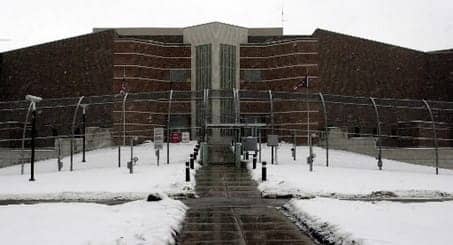
This is the Ohio State Penitentiary, where supporters of the Lucasville prisoners on hunger strike will rally tomorrow, Saturday, Jan. 15, on Dr. Martin Luther King’s birthday

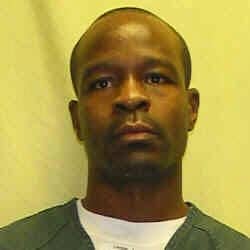
Three inmates on death row at Ohio State Penitentiary have been on hunger strike since Monday, Jan.3, to protest the conditions of their confinement. All three prisoners received death sentences following the rebellion in the Southern Ohio Correctional Facility in Lucasville, Ohio, and have been held at the highest security level, Level 5, since they were transferred to OSP In 1998.

The hunger strikers, Keith LaMar, Siddique Abdullah Hasan (Carlos Sanders) and Jason Robb are simply asking that they be treated like other death row prisoners. A fourth prisoner, Namir Abdul Mateen (James Were), may join the hunger strike as his health permits. Other prisoners at OSP may go on hunger strike on Jan. 15 to show their support for the hunger strike in progress.

Robb has pointed out that other prisoners from the Lucasville disturbance have been transferred out of OSP or have had their security levels reduced so that they are not suffering the extreme restrictions of Level 5. In the words of LaMar, also known by his chosen name, Bomani Hondo Shakur:

“We have undergone penalty on top of penalty, kept from fully participating in our appeals, from touching our friends and families, denied adequate medical treatment, and so many other things that are too numerous to name. In a word, we have been tortured. And, yes, I’m aware that the word ‘tortured’ is a strong word to use, but I know of no other word that more adequately describes what we have been through. We have been put through hell.”

An “Open Letter” has been circulating and has collected more than 1,200 signatures (see below). In the sampling of the first 100 names, it can be seen that the prisoners have support from Ohio, many other states and all across the globe, among them many prominent citizens. After the participants in the rally have had the opportunity to add their names to the list, a delegation of friends and family members of the hunger strikers will proceed to OSP to present the signed letter to Warden David Bobby’s designated representative. Youngstown attorney Staughton Lynd is available to answer questions about the “Open Letter” at (330) 652-9635.

Supporters are driving in from other states and from several Ohio cities to participate in the rally at the gates of OSP. Family members of the hunger strikers will be in attendance. Messages of solidarity will be read that are coming in from across the country and around the world. In particular, people in Ireland are remembering the tragic deaths of 10 prisoners who went on hunger strike thirty years ago and are sending words of understanding and support.

The location for Saturday’s event is 878 Coitsville-Hubbard Rd., Youngstown, Ohio. The rally and press conference is a joint effort of the Youngstown-based prisoner-advocacy organization, LOOP (Loved Ones Of Prisoners), the Lucasville Uprising Freedom Network and the Cleveland chapter of the New Black Panther Party.

Contact Sharon Danann and the Lucasville Uprising Freedom Network at (216) 571-2518 lucasvillefreedom@gmail.com [2].

---------------------------------------------


Open letter to Ohio prison officials on behalf of the Lucasville prisoners on hunger strike

To: Warden David Bobby, Ohio State Penitentiary; Director Gary Mohr, Ohio Department of Rehabilitation and Correction; and Chief William A. Eleby, Bureau of Classification, Ohio Department of Rehabilitation

We the undersigned call for an end to isolated “supermax” imprisonment in Ohio State Penitentiary. We are especially concerned about the cases of Siddique Abdullah Hasan (Carlos Sanders), Bomani Shakur (Keith LaMar), Jason Robb and Namir Abdul Mateen (James Were), who are on hunger strike in protest against their conditions of confinement. We understand that they have taken this course of action out of total frustration with their hopeless situation at OSP (Ohio State Penitentiary).

These men have been kept in isolation continuously since they were sentenced to death for their alleged roles in the 11-day rebellion at the Southern Ohio Correctional Facility (SOCF) in Lucasville, Ohio, in April 1993. Hasan and Robb were two of the three men who negotiated a peaceful surrender in that rebellion and their actions undoubtedly saved lives.

Throughout their more than 17 years of solitary confinement, these four men have been subjected to harsher conditions than the more than 150 other men sentenced to death in Ohio. The conditions under which they are confined prevent them from ever being in the same space as another prisoner. Judge James Gwin of federal district court noted with amazement during the trial of the prisoners’ class action, Austin v. Wilkinson, that death-sentenced prisoners at the highest security level in the Ohio State Penitentiary wanted to be returned to Death Row!

The four have suffered Level 5 top security isolation since OSP was opened in 1998. This essentially means that they live in 23-hour lockup in a hermetically sealed environment where they have almost no contact with other living beings – human, animal or plant. When released from their cells for short periods of “recreation,” they continue to be isolated from others. During occasional visits, a wall of bullet-proof glass separates them from their visitors. They remain shackled, despite the fact that they could do no harm in these secure spaces. A few booths away, condemned men from death row sit in cubicles where a small hole is cut from the security glass between them and their visitors. They can hold their mother’s hand. With a little effort, they can kiss a niece or a grandchild. They do not have to shout to hold a conversation.

Hasan, LaMar, Robb and Were experience annual “security reviews,” but their outcome is predetermined. The prison authorities have told them, in writing:

“You were admitted to OSP in May of 1998. We are of the opinion that your placement offense is so severe that you should remain at the OSP permanently or for many years regardless of your behavior while confined at the OSP.”

The lack of a meaningful review violates the due process clause of the Fifth Amendment of the U.S. Constitution. Keeping men in supermax isolation for long periods clearly violates the Eighth Amendment prohibition of cruel and unusual punishment. Moreover, the emphasized words above directly violate the explicit instruction of the Supreme Court of the United States in Wilkinson v. Austin.

These men are being held in solitary confinement permanently, until they are put to death by Ohio or their convictions reversed. This is not simply long-term solitary confinement, but in essence permanent solitary confinement.

Other prisoners sentenced to death for alleged crimes comparable to or worse than those for which Hasan, LaMar, Robb and Were were found guilty have been moved off of Level 5 – to Death Row, to Level 4 at OSP and out of OSP entirely. One of the four Lucasville defendants asks, “Must I have a mental breakdown in order to get off Level 5?”

We demand that the Ohio prison authorities remove these four men from Level 5 “supermax” security and that they end the cruel practice of long-term isolated confinement.

Signed by:

Jules Lobel, Vice President, Center for Constitutional Rights, Professor of Law, University of Pittsburgh

Christine Link, Executive Director, ACLU of Ohio

Noam Chomsky, Massachusetts Institute of Technology

David Goldberger, Professor Emeritus of Law, Ohio State University

Barbara Ehrenreich, author, academic, activist

Mike Ferner, National President, Veterans for Peace

Immanuel Wallerstein, academic and writer

Boaventura de Sousa Santos, University of Coimbra, Distinguished Legal Scholar, University of Wisconsin

Edward S. Herman, Wharton School, University of Pennsylvania

Professor Gabriel Palmer-Fernandez, Director, Dr. James Dale Ethics Center, Youngstown State University

Andrej Grubacic, author and lecturer at San Francisco Art Institute

Peter Linebaugh, historian, University of Toledo, Ohio

Michael Albert, founder, Znet

Professor Thomas Mathiesen, KROM, The Norwegian Association for Penal Reform, Oslo, Norway

Jana Schroeder, Former Director, American Friends Service Committee Ohio Criminal Justice Program

Jesse Lemisch, Professor of History Emeritus, John Jay College of Criminal Justice, CUNY

Denis O’Hearn, Professor of Sociology, Binghamton University, SUNY

Ellen Kitchens, CURE-Ohio, Inc.

Christian G. De Vito, Associazione Liberarsi, Italy

Lorry Swain, migrant rights activist, Ohio

Robert W. McChesney, Gutgsell Endowed Professor, University of Illinois at Urbana, Champaign

Jason Jaffery, Development Director, ACLU of Ohio Foundation

Kathie Izor, Colorado CURE Board

Raj Patel, author and scholar

Katherine Soltis, Chair, Cleveland Coalition Against the Death Penalty

Ioanna Drosou, Greek Initiative for Prisoners’ Rights

Immanuel Ness, CUNY, Editor, Working USA

Ron Keine, Assistant Director, Witness to Innocence

Carlos Ivan Ramos, Ph.D., Executive Director, Hispanic UMADAOP, Cleveland

Michael Parenti, author and scholar

Veronica Dahlberg, Board Member, ACLU Cleveland Chapter

Professor Phil Scraton, Law School, Queens University, Belfast

Sam Bahour, Management Consultant, West Bank, Palestine

Bob Fitrakis, Editor, Free Press, Columbus, Ohio

Faye Harrison, Southern Human Rights Organizers’ Network

Reverend Dorsey R. Stebbins, Cincinnati, Ohio

Herbert P. Bix, Pulitzer Prize-winning historian, SUNY, Binghamton

John Polanski, ordained minister, Mineral Ridge, Ohio

Judith Stanger, retired teacher, Boardman, Ohio

James Gilligan, M.D., Professor of Psychiatry and Law, New York University

James E. Ray, ordained minister, Poland, Ohio

Marcus Rediker, Historian, University of Pittsburgh

John Stoffer, Elder of Presbyterian Church, Salem, Ohio

Kathleen McGarry, attorney, New Mexico

Mary Ann Meaker, Ohioans to Stop Executions

Paulette F Dauteuil, The Jericho Movement for PP’s/POW

Sarah L. Duncan, retired teacher, Vienna, Ohio

Fr. Joseph E. Mulligan, S.J., Nicaragua

Jim Jordan, assistant for autistic children, Vienna, Ohio

Joe Lombardo, co-coordinator, United National Antiwar Committee, UNAC

Andrew Lee Feight, Associate Professor of History, Shawnee State University

Jane Stoffer, retired drug counselor, Salem, Ohio

Margaret J Plews, Arizona Prison Watch

Peter Rachleff, Professor of History, Macalester College, Saint Paul, Minnesota

Lynn Thompson Bryant, Presbyterian pastor, Akron, Ohio

And more than 1,100 others.

Related Posts
Monday, January 3, 2011

Lucasville Five Hunger Strike: Then and Now.

This came in this AM via Freedom Archives. Claude can be contacted below if you want to get on their list-serves.

-------------

Lucasville Five Hunger Strike Begins --An interview with author Staughton Lynd

Sunday, January 2, 2011

By Angola 3 News

In 1993, the maximum security Southern Ohio Correctional Facility in Lucasville, Ohio was the site of an historic prisoner rebellion, where more than 400 prisoners seized and controlled a major area of the prison for eleven days. Nine prisoners alleged to have been informants and one hostage correctional officer named Robert Vallandingham, were murdered. Following a negotiated surrender, five key figures in the rebellion were tried and sentenced to death. Known since as the Lucasville Five, they are Namir Abdul Mateen (James Were), Siddique Abdullah Hasan (Carlos Sanders), Bomani Hando Shakur (Keith Lamar), George Skatzes and Jason Robb.

The Lucasville Five are now back in the news with an announcement last week that four of the five will be participating in a simultaneous “rolling hunger strike,” beginning today, January 3. They are using the hunger strike to protest their convictions (having always maintained their innocence) as well as their living situation, which is more restrictive than for most prisoners on Ohio’s death row. The statement issued by the Lucasville Uprising Freedom Network explains that “the hunger strike will proceed in an organized manner, with one prisoner, probably Bomani Shakur starting on Jan.3. The hunger strike becomes official after he has refused 9 meals. Therefore the plan is that 3 days later, Siddiquie Abdullah Hasan will start his hunger strike and 3 days later, Jason Robb will follow. Namir Mateen has a great willingness to participate and plans to take part to the extent that his diabetes will allow.”

Staughton Lynd is the author of the 2004 book, Lucasville: The Untold Story of a Prison Uprising, which asserts that the Lucasville Five are innocent men, who were framed by the State of Ohio. In a review of Lucasville, the news website, Solidarity, concludes that “Lynd presents sufficient evidence and argumentation to cast more than reasonable doubt on the convictions of the Lucasville Five.” The book’s “immediate agenda is to mobilize public opinion to achieve amnesty for the Lucasville Five. In the 1970s, the governor of New York was compelled to grant amnesty to the Attica rebels based upon revelations of state malfeasance. Lynd contends the Lucasville Five’s death sentences should be wiped clean on the same grounds.”

In the foreword to the upcoming second edition of Lucasville, being released by PM Press in February, death row journalist Mumia Abu-Jamal writes that the Lucasville Five "sought to minimize violence, and indeed, according to substantial evidence, saved the lives of several men, prisoner and guard alike…they rose above their status as prisoners, and became, for a few days in April 1993, what rebels in Attica had demanded a generation before them: men. As such, they did not betray each other; they did not dishonor each other; they reached beyond their prison ‘tribes’ to reach commonality."

Angola 3 News: Can you please give us some historical background on the 1993 uprising and the subsequent convictions of the Lucasville Five?

Staughton Lynd: There were revolts at the old Ohio State Penitentiary in Columbus in the late 1960s. The state government decided to build a new maximum security prison in a town called Lucasville, just north of the Ohio River separating Ohio and Kentucky.

The new prison housed between 1,500 and 2,000 prisoners. More than half the prisoners at the new Southern Ohio Correctional Facility (SOCF) were African Americans from cities like Cincinnati, Dayton, Toledo, Cleveland, Akron and Youngstown. Lucasville was all white and inevitably, most of the correctional officers at the new prison were Caucasian.

'Luke' developed a well-deserved reputation for violence. There was a horrible incident in 1990 when, in a sequence of events that remains ambiguous, a black prisoner followed a white teacher into a women's restroom. White guards broke down the door to the restroom and, as they did so, the prisoner cut the teacher's throat.

The State sent in a new warden who instituted 'Operation Shakedown.' Prisoners were allowed one short telephone call a year, at Christmastime.

In April 1993 the new warden proposed to test all prisoners for TB by means of an injection. More than fifty Muslim prisoners protested. They said the injection would contain phenol, a form of alcohol; that this was forbidden by their religion; and that there were alternative means of testing for TB, by sputum or X ray. Warden Tate said it would be done his way, by injection, beginning Monday, April 12.

On April 11, Easter Sunday, prisoners returning from the recreation yard occupied one large housing block, L side. Guards were overpowered. Persons severely injured in the takeover, both guards and prisoners believed to be snitches, were carried out to the yard. Eight officers were held as hostages. In the course of an 11-day standoff, nine prisoners and one hostage guard were murdered. There was a negotiated surrender.

A3N: Why was this story so important to you that you decided to write a book about it?

SL: In 1996 my wife and I became aware that as a result of the Lucasville uprising, a new maximum security prison called the Ohio State Penitentiary (OSP) was being built in Youngstown. We organized a community forum at which one of the speakers was Jackie Bowers, sister of one of five prisoners condemned to death after the surrender. We met her brother, George Skatzes (pronounced 'skates.') His lawyer told us that we could best help by investigating facts not presented at trial and we have been doing that ever since.

The importance of the story is that the five men sentenced to death are three blacks and two whites. Two of the three blacks, Siddique Abdullah Hasan and Namir Abdul Mateen, are Muslims. At the time of the rebellion the two whites were members of the Aryan Brotherhood. One is still an AB leader although Skatzes has withdrawn. These five men have acted in solidarity during their almost eighteen years of solitary confinement. They have refused to 'snitch' on each other.

A3N: What facts do you cite for arguing that the State of Ohio deliberately framed innocent men?

SL: My allegation that the State of Ohio has deliberately framed innocent men is presented in a book, Lucasville: The Untold Story of a Prison Uprising (Temple University Press, 2004), a second edition of which will be published in 2011 with a Foreword by Mumia Abu Jamal, and in a law review article, "Napue Nightmares: Perjured Testimony in Trials Following the Lucasville, Ohio, Prison Uprising," Capital University Law Review., v. 36, No. 3 (Spring 2008) The key fact is that the State made it clear early on that they wanted to put the alleged leaders of the disturbance to death, and built cases against the Five almost wholly on the basis of testimony by prisoners who, in exchange for their testimony, received benefits such as early parole.

A3N: Why you believe the trial itself was unfair?

SL
: The trials were unfair for a variety of reasons, but the two basic facts were: 1) the Five were tried before so-called 'death-qualified' juries, that is, juries from which persons opposed to the death penalty were excluded; and 2) the prosecution's evidence, as I indicated earlier, came almost entirely from prisoner informants in exchange for bargained-for benefits like parole.

A3N: How has your 2004 book been received?

SL: My book was banned from all Ohio prisons and it provoked a good deal of discussion in Ohio. In 2007, a play based on the book was presented in seven Ohio cities. The American Civil Liberties Union has filed friend of the court briefs, based on the book, in the trials of Skatzes and Hasan.

A3N: Can you please tell us more about the hunger strike? How do prison officials publicly justify these conditions that are being challenged?

SL: As to the goals of the hunger strike, I refer the reader to Keith LaMar's statement. LaMar emphasizes that he understands the prison system's concern for security, but, he insists, a 'privilege" such as the opportunity to touch a parent or other relative does not threaten security. The more than 150 other death-sentenced prisoners in Ohio enjoy such privileges. On the other hand, the Lucasville Five are held alone in their small cells 23 hours a day, and when released for an hour of so-called recreation cannot be in the same space as any other human being.

A3N: Can you please explain why George Skatzes is not currently housed alongside the other four members of the Lucasville Five and how his conditions differ from the others?

SL: George Skatzes was transferred to OSP when it opened in 1998 along with the other members of the Lucasville Five. He was transferred out two years later because the authorities feared that he was so depressed that he might commit suicide. He is held with about thirty other death-sentenced prisoners considered seriously mentally ill at the Mansfield Correctional Institution, north of Columbus.

A3N:
How can our readers best help to support the upcoming hunger strike?

SL:
Readers can help by contacting Professor Jules Lobel, vice president of the Center for Constitutional Rights, jll4@pitt.edu>, and Professor Denis O'Hearn, director of graduate studies in sociology at the State University of New York, Binghamton, < denisohearn@googlemail.com> They are circulating a statement of support nationally and internationally.


--Angola 3 News is a project of the International Coalition to Free the Angola 3. Our website is www.angola3news.com where we provide the latest news about the Angola 3. We are also creating our own media projects, which spotlight the issues central to the story of the Angola 3, like racism, repression, prisons, human rights, solitary confinement as torture, and more.


Freedom Archives
522 Valencia Street
San Francisco, CA 94110

415 863-9977

www.Freedomarchives.org

Questions and comments may be sent to claude@freedomarchives.org